
Hilliard Previous Residents by Era
The trail for Hilliard previous residents is an evidence ladder, not a continuous Hilliard list. Start with the Hilliard property parcel so each older source can be tested against the same legal description. Hilliard ownership sources and household sources do different work. The Hilliard Recorder can document a transfer, while a directory or census may show a person at an address for a point in time. Hilliard coverage must be confirmed for each historical volume or map.
| Source | Years available | Where held | What it shows |
|---|---|---|---|
| Hilliard deed books and archive | Deed books from 1803; archive example 1804–1913; regular deed index from 1/2/1914 | Recorder Cloud Search, legacy system, or counter | Hilliard ownership transfers, party roles, legal descriptions, and plats |
| Hilliard Auditor property roll | Current public portal; prior history varies by parcel | Franklin County Auditor | Current Hilliard parcel identity, transfer and assessment clues |
| Hilliard-area city directories | 1841 forward; address section from 1911 | CML Main Library and digital collection | Annual Hilliard names, addresses, and sometimes occupations |
| Hilliards Times | March 1927–March 1934 | CML microfilm | Hilliard community notices and obituary context |
| Hilliard Weekly Review | August 1961–July 1964 | CML microfilm | Hilliard community notices and local context |
| Hilliard federal census context | Released after 72 years; 1950 was latest released in 2026 | CML or National Archives sources | Named Hilliard household members at a census-date snapshot |
| Hilliard Historical Society | Specific year runs not verified | 5274 Norwich Street | Local Hilliard plat, genealogy, and land-history inquiry |
| Hilliard planning and permit records | Current portal; older series dates not verified | OpenGov or City Clerk request | Hilliard project or construction timing evidence |
Use the Hilliard Recorder for an ownership question, CML for a dated Hilliard household question, and the Clerk or Historical Society when the online route ends. A missing Hilliard entry is a reason to check the date, street form, and custodian, not proof that nobody was there.
Start Hilliard Previous Residents at Parcel
Open the Franklin County Auditor address search and copy the Hilliard site address exactly. Save the Hilliard parcel ID, legal description, subdivision or condominium name, current owner, current transfer field, and owner mailing address as separate facts. The Hilliard Auditor form uses Street No., Direction, Street Name Only without a suffix, and Unit. It also permits street wildcards and provides range help at 614-525-4663.
The Hilliard Auditor card is the bridge into past Hilliard residents research because it fixes the land before names are compared. Its Hilliard site address is the physical parcel. A Hilliard owner mailing address is tax correspondence and may point elsewhere. Neither field proves a full household. A Hilliard parcel’s legal description is the durable key when street spelling, direction, a unit, or municipal boundaries cause an older result to look different.
Trace Hilliard Previous Residents Through Deeds
A Hilliard Franklin County deed chain begins with the current parcel evidence and moves one conveyance at a time. In Hilliard Recorder terms, the grantee is the buyer or receiving party. The grantor is the seller or transferring party. Search the current Hilliard buyer as grantee, read the deed for the seller, then search that seller as a grantee to locate the prior purchase. Repeat only when the legal description and chronology still fit the Hilliard parcel.
- Record the Auditor’s parcel ID, legal description, current owner, and most recent transfer information.
- Use the current owner as a party or grantee in Recorder Cloud Search, with the recorded date, document number, or legal description when known.
- Read the document for the grantor, grantee, recorded date, instrument reference, and legal description.
- Search the seller as a grantee to locate the deed that brought the property to that seller.
- Continue backward, checking the plat or subdivision language whenever names or street forms become uncertain.
- Grantor
- The party transferring an interest in a recorded document, commonly the seller in a deed.
- Grantee
- The party receiving an interest, commonly the buyer in a deed.
- Chain of title
- The documented sequence of recorded transfers for a parcel, not a list of all occupants.
- Legal description
- The recorded lot, block, subdivision, or land wording that identifies property beyond its everyday street address.
The Recorder Advanced Search is the best Hilliard previous-resident tool for party, grantor, grantee, date, document number, book, volume, page, OCR, and legal-description work.
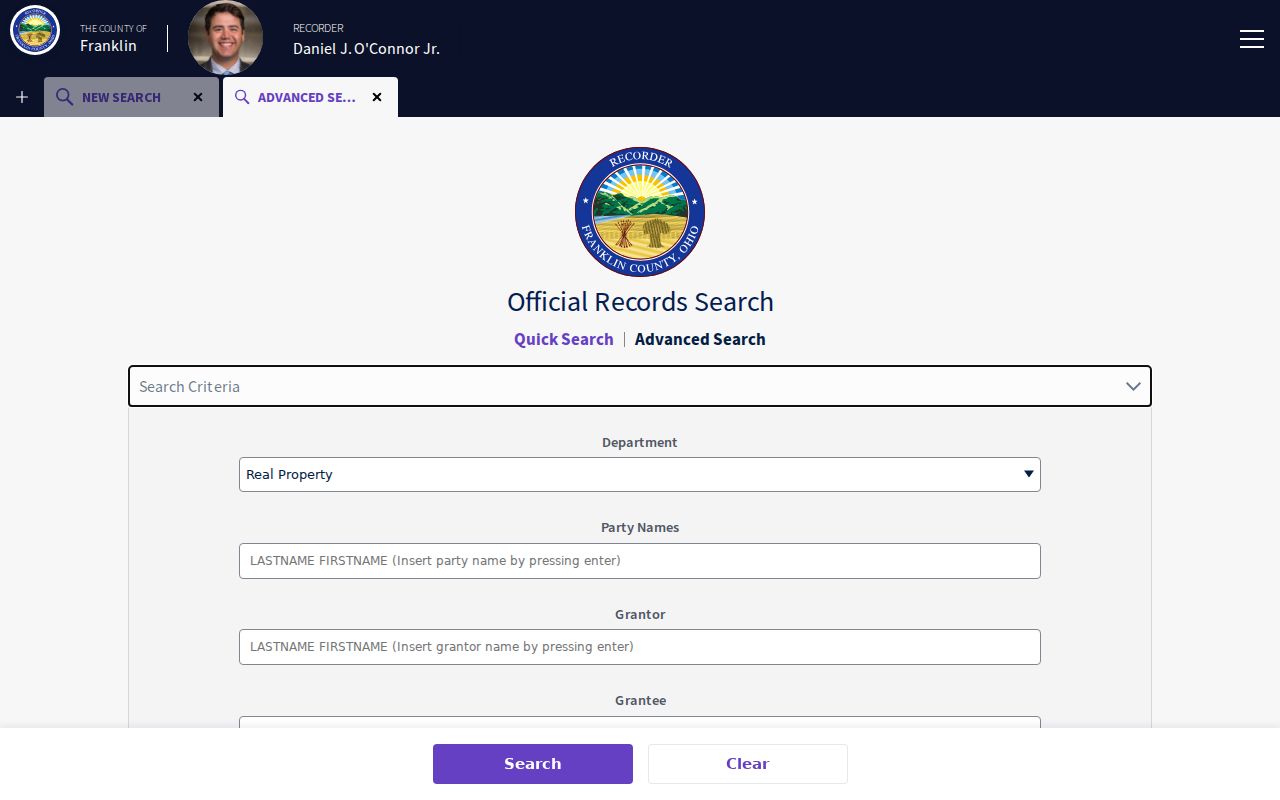
The form’s separate party and legal-description fields support a careful backward trail when a simple address search does not resolve an older record.
Hilliard Previous Residents and Index Eras
Franklin County’s Hilliard history changes the method for older Hilliard previous residents searches. CML’s Hilliard house-history guide says deed books date to 1803. Hilliard Recorder archive research reaches 1804–1913, while the older Recorder brochure identifies a deed-index start of January 2, 1914 and a mortgage-index start of January 7, 1970. Do not assume that a general Hilliard online-search statement means a particular old image or book is online.
After May 15, 1997, official recording numbers are 15 digits. Certain 1980–1997 records use imported instrument numbers with microfiche volume and page, while records before October 10, 1980 can use book, volume, and page. If the party or date stops resolving, contact Recorder Customer Service for counter or book guidance at 373 S. High Street, 18th Floor, 614-525-3930, Monday through Friday from 8 a.m. to 4 p.m.
The Recorder’s recording FAQ explains the reference formats used across those eras.
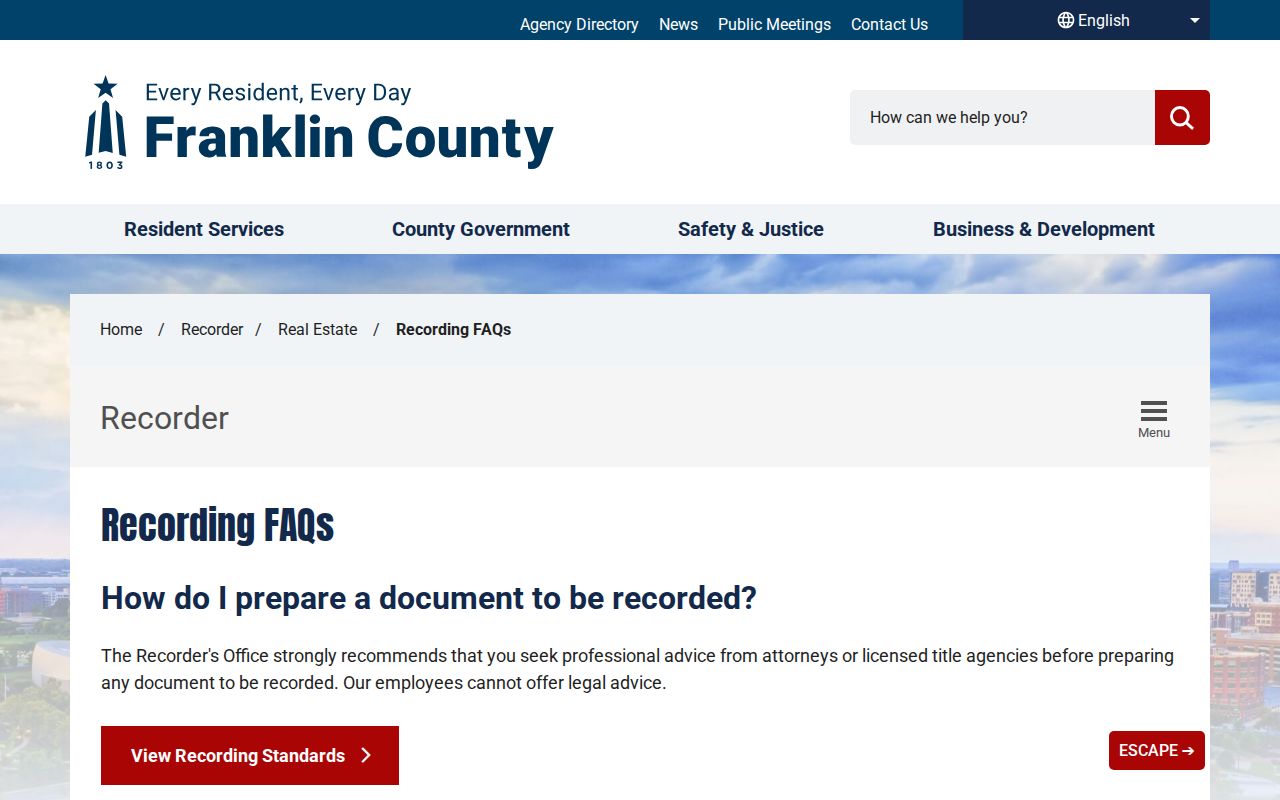
Save the document number or historic book reference with the address notes; it is more dependable than a name alone in a later counter request.
Hilliard Address Legal Descriptions
Hilliard address continuity needs a local check. City GIS assigns street numbers from an existing grid, with odd numbers on west and south sides and even numbers on east and north sides. Directional suffixes can matter for loops and circles, and a unit is a secondary address element. The City also checks street-name conflicts across 43016, 43026, 43119, 43221, and 43228 because those service areas overlap City, Police, and Norwich Fire contexts.
Hilliard has grown through subdivisions and annexations, including 591 acres added from 2016 onward according to the planning map. Before calling two historical entries different places, compare the legal description, subdivision plat, parcel history, city-limit history, direction, suffix, and unit. No official citywide renumbering event was located, so no renumbering year should be assumed.
Hilliard Previous Residents in Directories
The household layer for Hilliard previous residents comes from Columbus Metropolitan Library rather than a guaranteed Hilliard-only annual volume. CML’s Main Library holds Columbus city directories from 1841 forward, and the address section begins in 1911. Search both the alphabetical and street sections when the address is within that year’s coverage. An entry can show a name, residence address, work or occupation shorthand, and status notation, but it does not establish ownership.
The CML house-history guide brings together deeds, directories, census, maps, newspapers, and local-history files for one property.
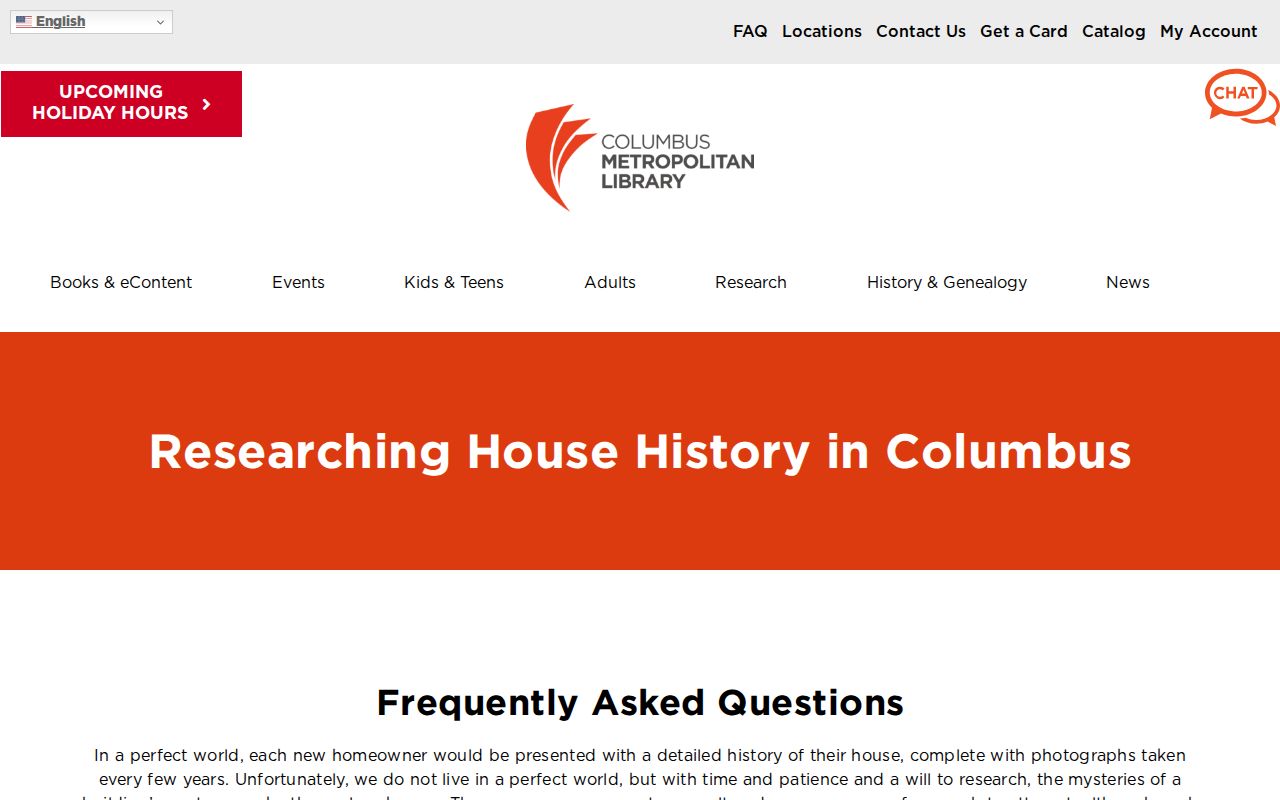
The guide’s combined-source method fits an address trail better than treating any one Hilliard directory result as a complete answer. The collection details are available through Hilliard City Directories.
Pair Hilliard Directories and Census
Use a date-based flow for Hilliard past residents: directory year, nearest released census, then a local paper or deed check. Directories offer an annual or near-annual clue where coverage exists. Census schedules offer a household snapshot every ten years after the 72-year release period. The current 2026 research reference identifies 1950 as the latest released census, so later household details should not be invented.
- Find the parcel and an ownership transfer that fits the period under review.
- Test the property in the directory’s street section and name section for the same year.
- Compare the name and address with the nearest released census record.
- Use CML microfilm for Hilliards Times, the two west-Franklin County runs, or Hilliard Weekly Review to close a dated gap.
Hilliard Historical Society, at 5274 Norwich Street, is a local fallback for genealogy, plat maps, and land-history questions. The City describes its library, museum, and historical village, but no online catalog or directory-year list was verified. Call 614-876-5880 with an address, name, and date range before visiting.
Hilliard Previous Residents in Notices
Obituaries and Probate records can close a Hilliard address timeline after a directory or census clue. CML’s Columbus News and Obituary Index covers selected news from 1960–1997 and obituaries from 1931–1997, with additional historic subdivisions. Library staff can retrieve obituaries, while a recorded property transfer and an obituary should be compared for date, identity, and address rather than joined by surname alone.
Franklin County Probate Court holds estates, guardianships, name changes, marriage records from 1803 forward, and historical vital material. Its certified-record desk accepts email and mail requests at probate@franklincountyohio.gov or 373 S. High Street, 22nd Floor, Columbus. Some files are confidential, including adoption and other protected categories.
The Probate certified-records page describes the office’s request channels.
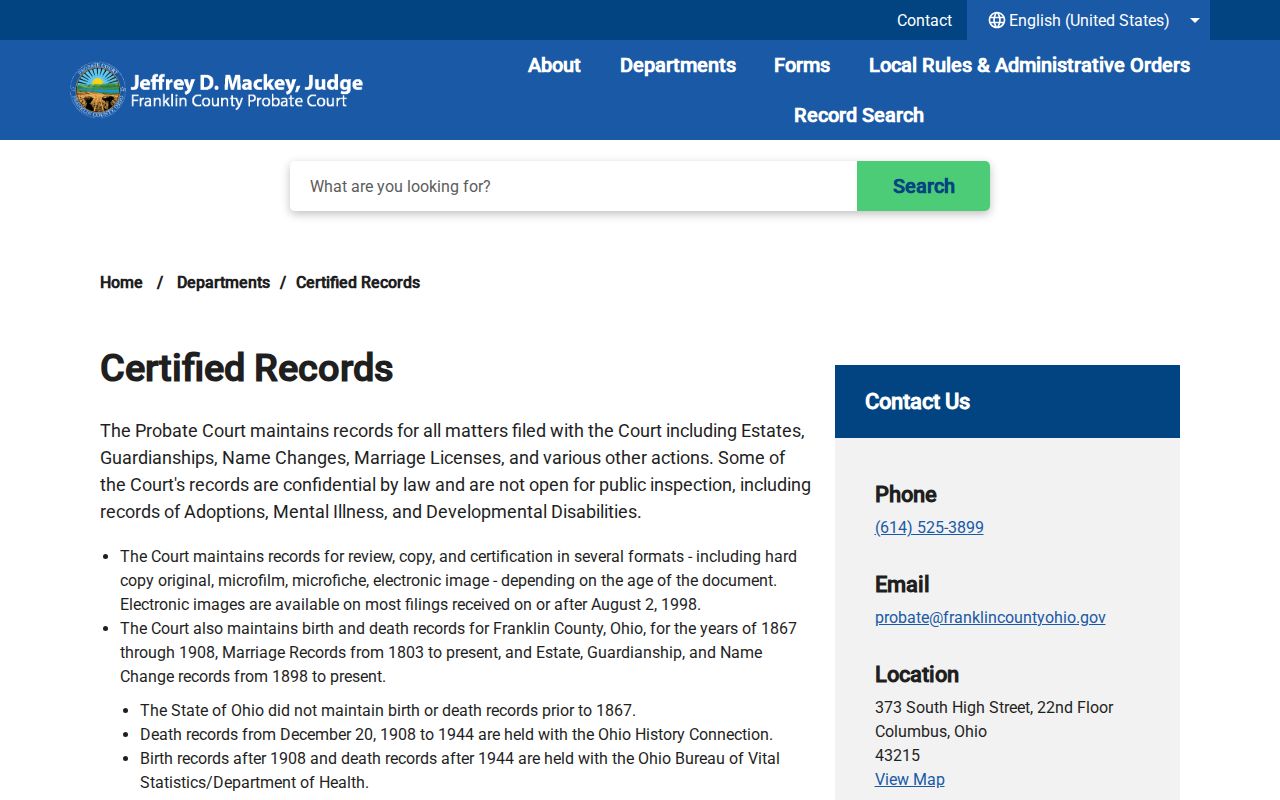
Probate can supply a carefully bounded family-history endpoint, but a sealed or confidential record must remain protected.
Hilliard Previous Residents Record Requests
When Cloud Search, library sources, or Probate records do not answer a specific Hilliard address question, use the custodian that actually holds the record. Recorder certified copies are available online, by mail, or in person. For city permits, plans, or municipal records not publicly searchable, the City Clerk route is publicrecords@hilliardohio.gov, 3800 Municipal Way, Hilliard, OH 43026, 614-334-2365, with regular inspection from 8 a.m. to 5 p.m. weekdays. OpenGov is a submission channel, not a confirmed historical public search.
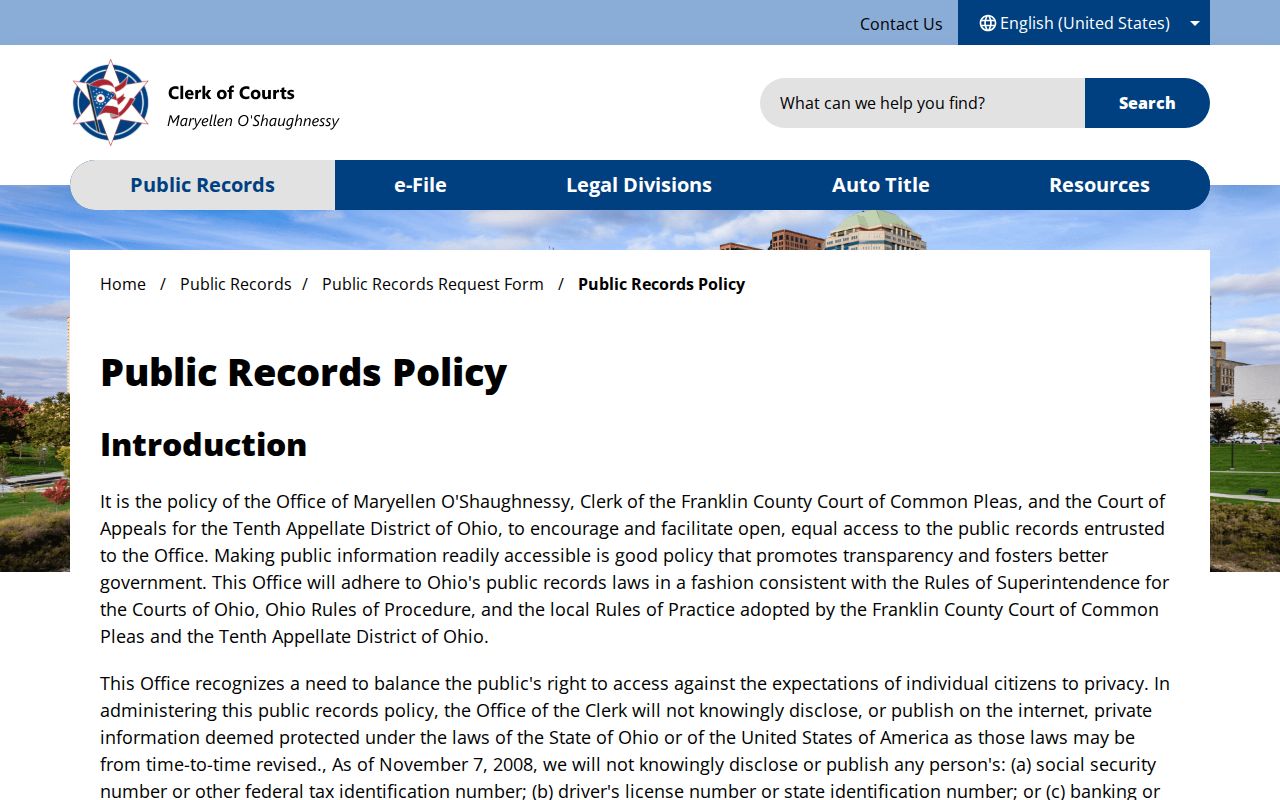
The Franklin County Clerk’s records policy is relevant when a specific Common Pleas or appellate file is the source. CIO is a convenience copy, while the official court file controls. A focused request should name the case, address, date, or document sought, and it may receive a redacted partial release where the law requires one.
The Franklin County Clerk public-records policy states the county court request approach.
A precise Hilliard request saves time and avoids asking one office to locate a record held by a different custodian.
Hilliard Previous Residents Privacy
Records about Hilliard past residents have lawful limits. Ohio Safe at Home, R.C. 111.41–111.47, uses substitute-address protections for qualifying participants. R.C. 149.45 provides a public-service-worker address-redaction path. An unavailable address can be a safety protection, not a research failure. Ohio’s voter rules also protect confidential records and sensitive identifiers. Never infer, publish, or attempt to rebuild a protected address.
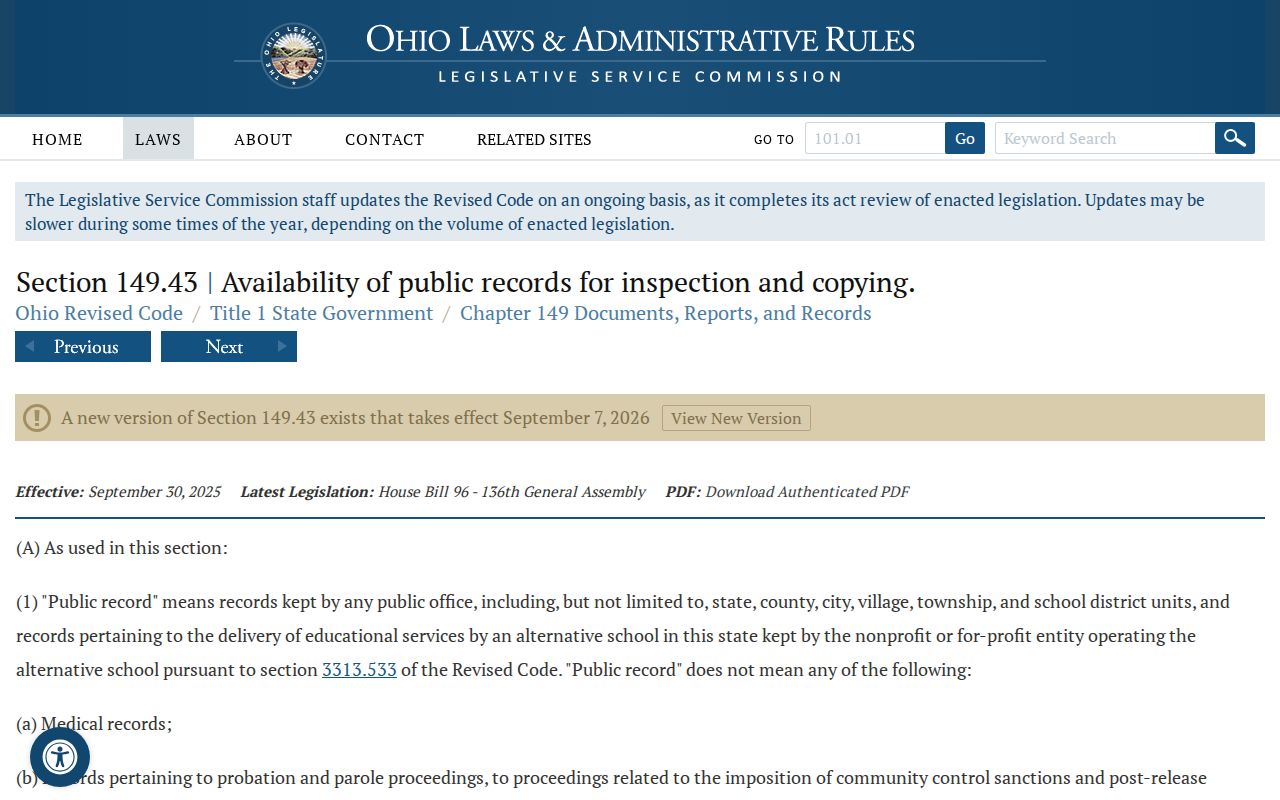
Ohio Public Records Act R.C. 149.43 requires a public office to release nonexempt portions and to make redaction visible. Request a correction from the office that maintains an inaccurate record; do not treat a privacy request as a way to alter the official historical trail.
The Ohio Public Records Act is the governing rule for the release and redaction principle.
For Hilliard past residents research, respect a lawful gap and verify any releasable detail with the office that holds the original record.