
Hilliard City Directory Holdings
Hilliard research is a regional shelf search. The strongest public run available to Hilliard researchers is at the Columbus Metropolitan Library Main Library Local History & Genealogy Division, often called CML Local History. Its house-history guidance describes annual Columbus city directories beginning in 1841 and says the street-address section begins in 1911. That makes the collection useful for a Hilliard name or address when the particular volume covers the Hilliard place and year, but it does not make every volume a complete Hilliard list. Check Hilliard geographic coverage before drawing a conclusion.
| Collection | Years | Where held | Access |
|---|---|---|---|
| Columbus City Directories | 1841 forward; street section from 1911 | CML Main Library Local History & Genealogy, 96 S. Grant Ave. | Annual run; Hilliard researchers check coverage and use the alphabetical and street sections. |
| CML City Directory Collection | Digitization in progress; early Franklin County telephone directories included | CML Digital Collections for Hilliard research | Searchable record and page interface; Hilliard researchers use the physical run for missing years. |
| 1889-1890 Columbus City Directory | 1889-1890 | CML Digital Collections for Hilliard research | R. L. Polk Co. sample of alphabetical private-citizen and business entries for Hilliard researchers to interpret cautiously. |
| Hilliard-area newspapers | 1927-1964 in the listed Hilliard runs | CML Hilliard microfilm | Hilliard community and obituary clues, not a substitute for a full directory. |
For an older Hilliard address outside the coverage of a Columbus volume, shift to the Hilliard Historical Society, Hilliard county deed books, plat material, local newspapers, and census records. A missing Hilliard directory entry can mean the year, geography, spelling, or editorial scope is wrong. It is not proof that a Hilliard person was absent.
Hilliard City Directories Beyond City Limits
The difference between an occupant and an owner matters in every Hilliard city directory search. The Main Library describes the directories as annual records of residents, addresses, and often occupations for Hilliard researchers to assess. A Hilliard person listed at a street number may have been an adult family member, boarder, or other occupant. The recorded owner of that Hilliard property can be someone else entirely. When a Hilliard name must be tied to land, compare the directory with the Franklin County deed and parcel record rather than turning one line of print into a title conclusion.
Hilliard began as a railroad-era community. Its original Hilliard area was platted in 1853 and it became a Hilliard village in 1869. Early Hilliard clues may therefore appear in Franklin County material or a regional publication instead of a stand-alone municipal directory. This Hilliard local history explains why a surname, old address form, township reference, or plat description may be the more productive search key.
Hilliard City Directory Digital Shelf
The CML City Directory Collection is being digitized over time and includes early Franklin County telephone directories. A Hilliard researcher can search a digitized item by name and examine it as a page image, but the online collection is not represented as a finished run for every Hilliard place or year. Search a Hilliard full name, then try initials and the address or street section when the volume provides one. If an expected Hilliard year is not online, the Main Library shelf remains the practical next channel.
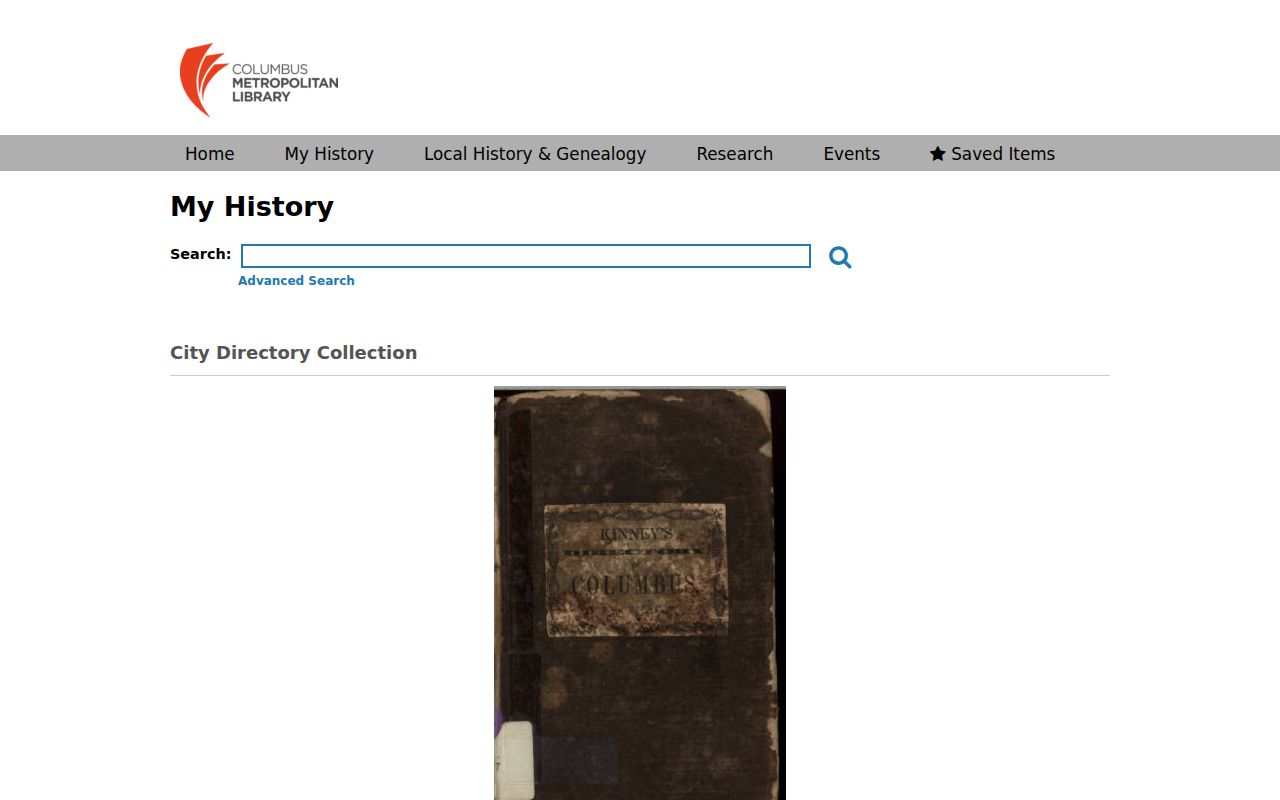
The digitized-collection view is a useful Hilliard first check, while the library collection supplies the missing-year fallback that an online result cannot promise.
CML Local History & Genealogy also maintains My History, a growing central Ohio archive of images, documents, maps, artifacts, and yearbooks. CML reported its two-millionth My History item in December 2025. That milestone expands the Hilliard material worth checking for visual or map context, but it does not guarantee that a particular Hilliard name or address has been digitized.
A Hilliard consultation, browsing session, or Ask a Librarian request can help turn a broad directory search into a Hilliard date-and-address question that library staff can route.
Read a Hilliard City Directory Entry
The inspected 1889-1890 R. L. Polk directory shows why a Hilliard city directory entry needs a careful reading. For a Hilliard research trail, a short printed line can contain a surname, given name or initial, generational or status notation, an occupation, a work location or employer phrase, and a residence marked with h. Several names can share an address. A widow notation such as wid or a suffix such as jr and sr can separate people with similar names. These are useful Hilliard clues, not a certification that the person owned the property or lived there continuously.
| Name | Surname, given name or initial, and sometimes a generational or status notation. |
|---|---|
| Occupation | Work description and, in some entries, an employer or work-location phrase. |
| h notation | Home or residence address, which can be shared by several people. |
| Status clue | Terms such as wid, jr, or sr where the compiler included them. |
| Editorial limit | An indexed entry records what the directory printed; it does not certify residence, ownership, or the full household. |
- Criss-cross directory
- A reverse directory arranged by street and number rather than by surname. CML documents street-address sections beginning in 1911, but coverage for a Hilliard property must be checked by year.
- Householder index
- An index that identifies a household or address entry in a Hilliard research trail. It helps locate a printed line, not every person connected with that address.
- Abbreviation key
- The volume's explanation of compressed terms such as h and wid. Hilliard researchers should review it before interpreting a line.
Hilliard City Directories and Paper Runs
When a Hilliard city directory gives only a thin annual clue, CML microfilm supplies short local newspaper runs that can add Hilliard community context. A Hilliard researcher may find an obituary, school notice, club item, local business advertisement, address description, or development reference. They are selective Hilliard publications, so a silence in the paper carries no more weight than a missing directory line.
- The Hilliards Times, March 1927 through March 1934.
- West Franklin County (Rural Urban) News, March 1955 through July 1956.
- West Rural-Urban News, August 1956 through March 1964.
- The Hilliard Weekly Review, August 1961 through July 1964.
The Columbus News and Obituary Index is another route for the closing part of a household trail. Its stated coverage includes selected news abstracts from 1960-1997, obituaries from 1931-1997, browseable obituary and death entries for 1913-1926 and 1940, and keyword-searchable obituary and death entries for 1927-1939.
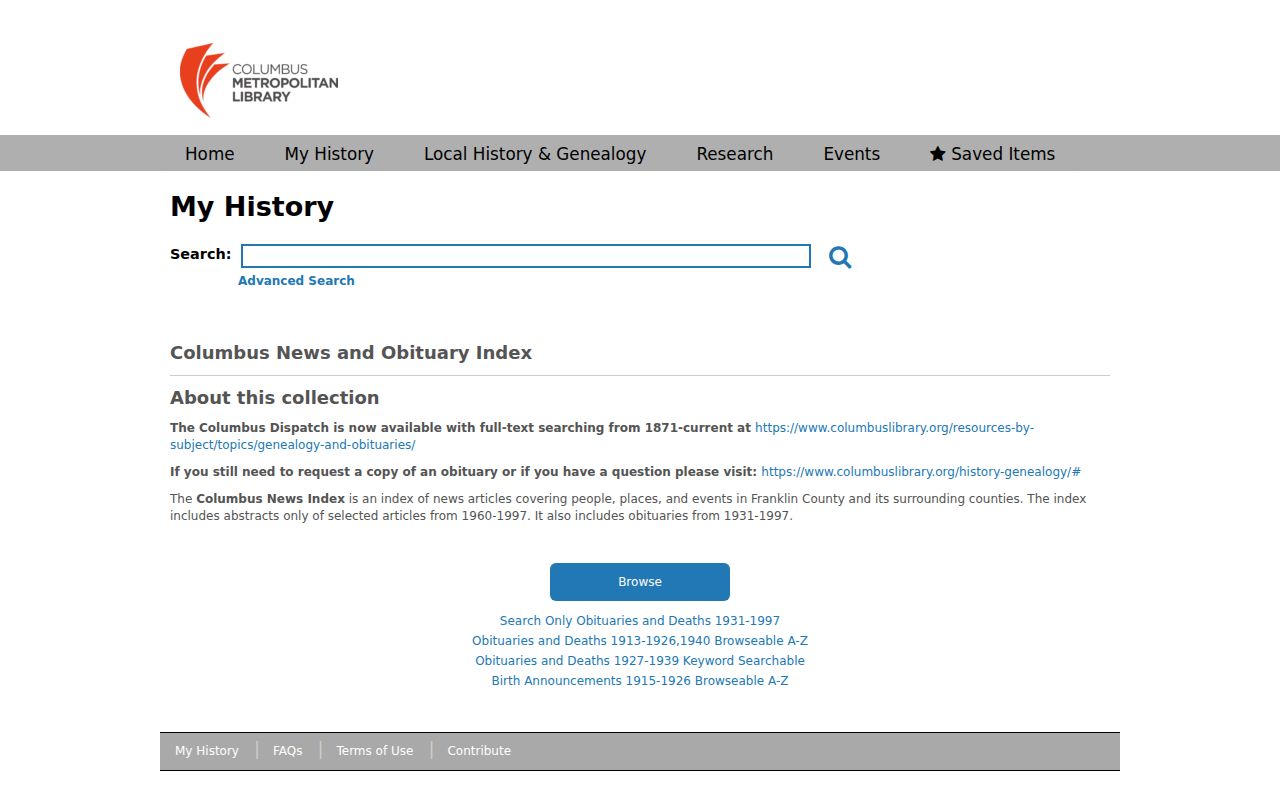
Use Hilliard surname variants and a Hilliard street name when available, then ask Local History staff for the source notice rather than treating an abstract as the whole record.
Trace Hilliard City Directory Households
A sound Hilliard household trail is built from dates, Hilliard addresses, and more than one kind of record. The Hilliard directory gives annual or near-annual clues. Census schedules give a Hilliard decennial household snapshot, and recorded instruments identify ownership instead of occupancy. CML notes that its available U.S. census records for Ohio are on microfilm. Pair the Hilliard directory year with the nearest released census and look for chronology that makes sense before joining two similarly named people.
- Find the earliest plausible name entry and record its exact spelling, initials, address, and every abbreviation.
- Follow the same name through later directory years, noting moves, changing occupations, and shifts in status notation.
- Where the volume supports it, check the street section for the address and record other printed entries without assuming they formed one household.
- Pair the directory year with the nearest released federal census, which can supply a dated household view between annual directory clues.
- Use obituary notices, probate material, or the newspaper run to test whether a disappearance reflects a move, a death, a spelling change, or an unlisted year.
For a current Hilliard parcel identity or a recorded Hilliard ownership question, begin with the Franklin County Auditor and Recorder instead. The Hilliard historical collections are best used as a companion layer, not as a replacement for land evidence.
Hilliard Directory Help Beyond Search
Hilliard researchers can use CML's walk-in browsing at Main Library, a one-hour in-person consultation, online one-on-one Ask a Librarian support, finding aids, and an obituary request service of up to six free obituaries a month. Those channels help Hilliard researchers when the catalog result is incomplete, a microfilm title needs checking, or a Hilliard directory year is not digitized. Describe the surname, Hilliard address, year range, and collection already checked so the request has a clear scope.
The Hilliard Ohio Historical Society is the local fallback for genealogy, plat-map, land-history, museum, and village context. It is at 5274 Norwich St. and can be reached at 614-876-5880. City material describes the Society's historical library and volunteer research, yet no official online catalog, directory-year list, or research-fee schedule was located. Call with a focused name, address, or year question before planning a visit.
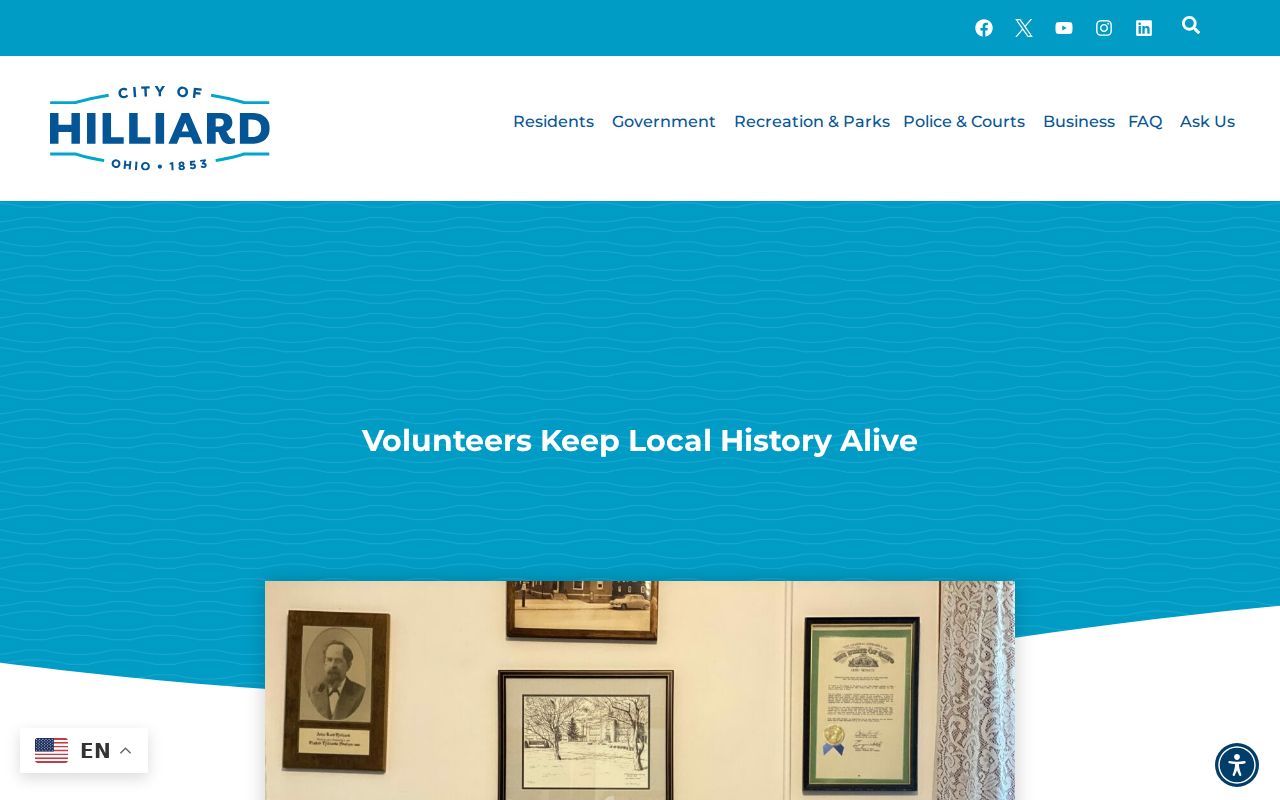
The Society can add Hilliard-specific context that a Columbus directory volume may omit, especially for a street, plat, or local-history lead.
Hilliard Directory Dates and Local History
Dates help set realistic expectations for the city directory shelves. Hilliard's own record story began with a small railroad-era plat inside Franklin County, while the county's deed records reach back before the municipal community. The later suburb grew through post-1950s development. A search that follows the period, rather than the present-day city label alone, is more likely to find the right collection.
- 1853: Hilliard's original area was platted.
- 1869: The community incorporated as a village.
- 1841 forward: CML reports Columbus city directories in its Main Library collection.
- 1911: The directory run's street-address section begins, subject to confirming coverage for the property and year.
- 1966: The Hilliard Ohio Historical Society had incorporated, creating a local history and genealogy channel.
Hilliard's history resources place the railroad, original plat, and later local structures in context. That context is especially useful when a printed address uses an older street form or points to a period before a modern subdivision existed.
The historic context helps a researcher choose between a library volume, county record, newspaper reel, or Historical Society inquiry without assuming one source covers every era.
Hilliard City Directory Limits
City directories are edited publications. They can omit people, use initials, carry old information, or cover a geography differently than a modern city boundary. The CML directory collection is still growing online, and Hilliard-specific coverage must be checked for the exact year and property. A street entry can identify an apparent occupant without proving a deed holder, and a deed can identify an owner without naming every person at the address.
Keep a small evidence trail: volume title, year, page, spelling used, printed address, and the next source that agrees or disagrees. When the search depends on a local paper, obituary, or Society material, preserve the date and source location as well. Note: Treat an absent or conflicting entry as a reason to test another source, not as a final conclusion about a Hilliard household.